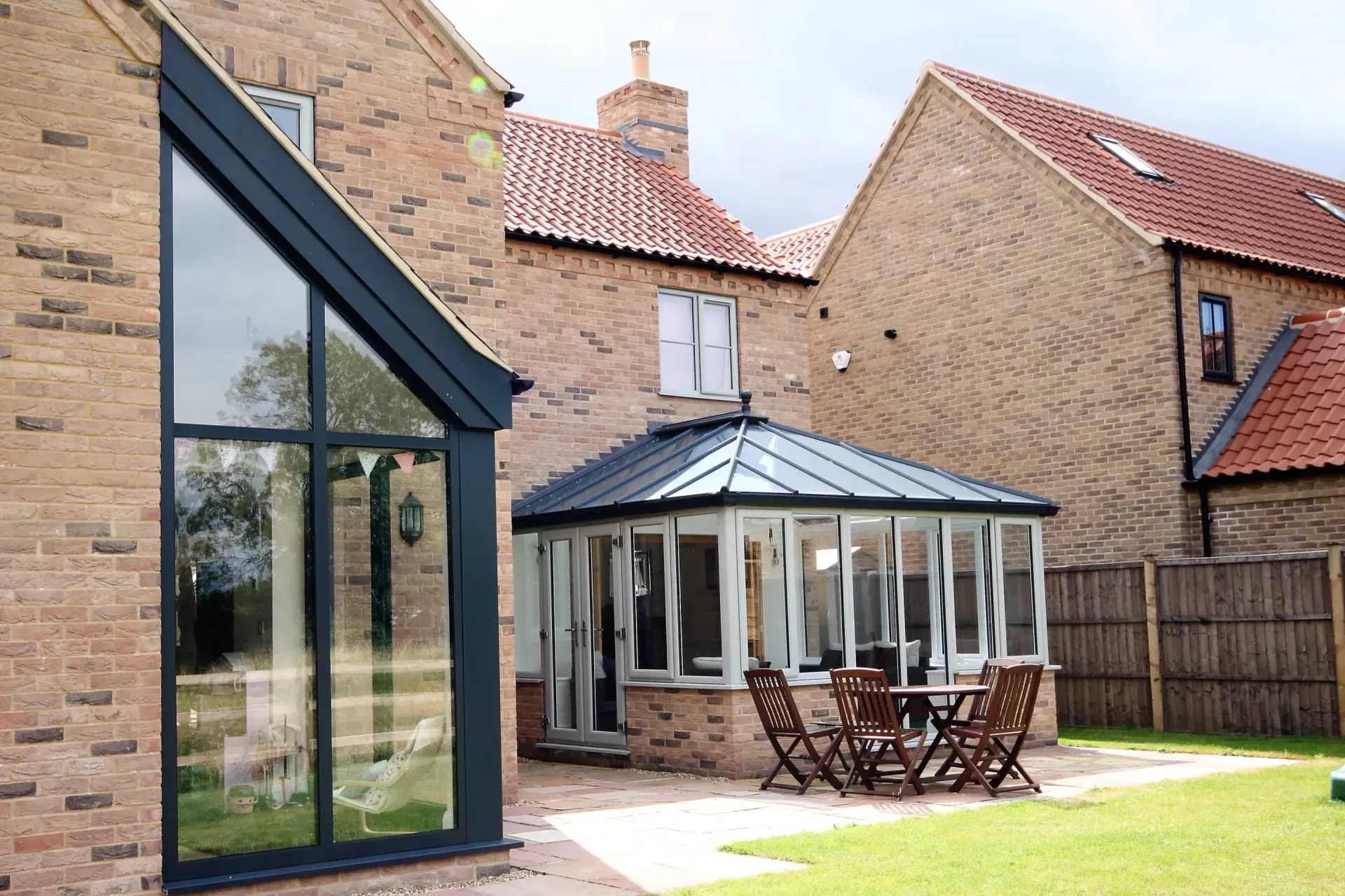
Sliding patio doors for small gardens: space-smart design ideas
A small garden doesn't have to mean giving up your connection to the outdoors. See how sliding patio doors make the most of every inch.
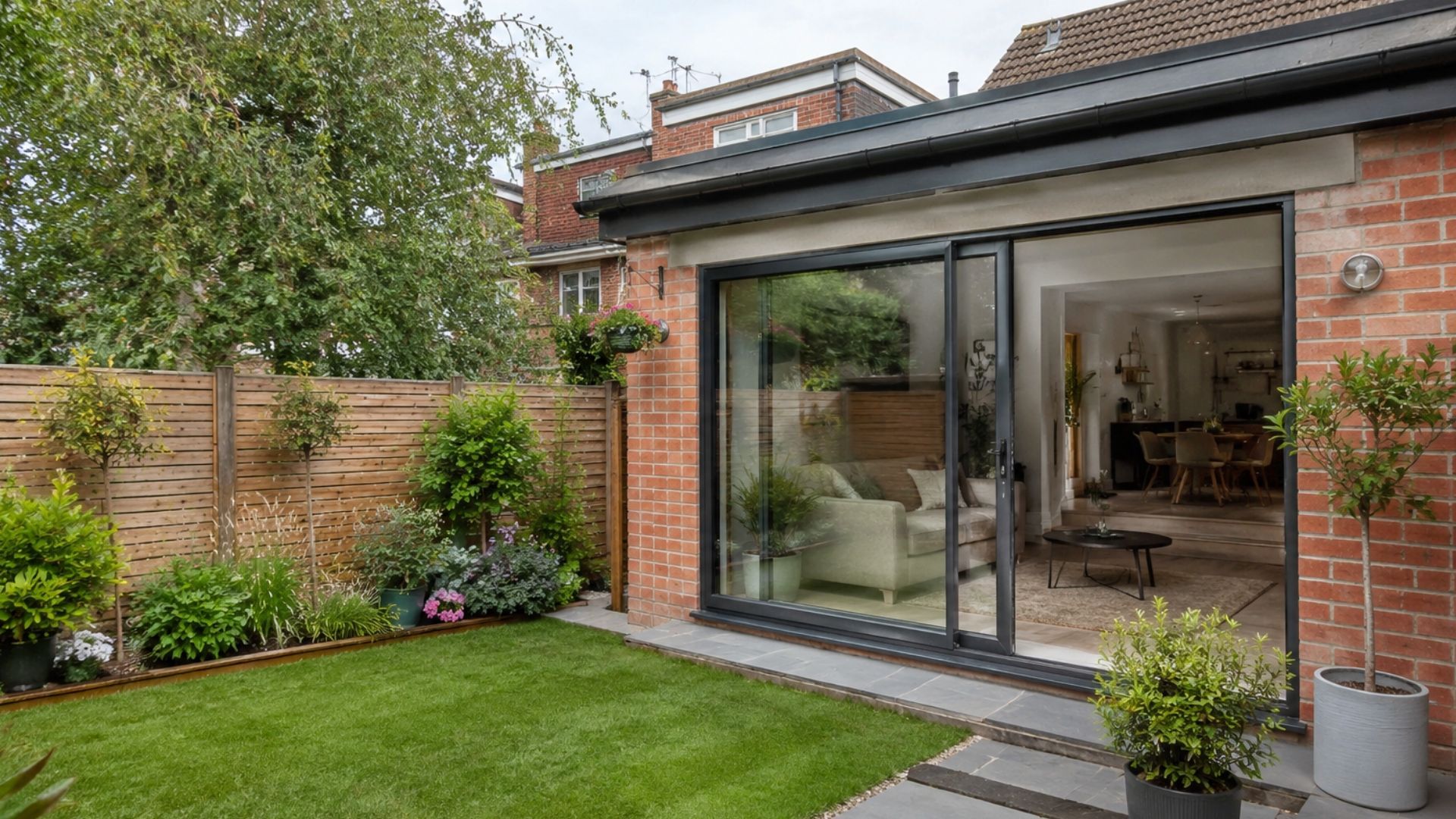
A small garden presents a specific design challenge. The less outdoor space you have, the more important it is that the connection between inside and outside feels generous.
A door that eats into your floor space, requires clearance to open, or visually interrupts the view does the opposite of what you need. It makes both the room and the garden feel smaller than they are.
The good news is that the door itself can do much of the heavy lifting. The right choice of patio door can make a modest garden feel like a natural extension of the room rather than an entirely separate area. Sliding patio doors are especially well-suited to this.
How sliding patio doors work
Sliding patio doors have two or more large glass panels in a frame. These slide along a track fixed to the floor and are guided at the top.
The panels move smoothly on rollers and stack neatly behind each other when open, rather than protruding into the room or garden. The key advantage is simple: the door moves along the wall, so it requires no extra floor space when open and no clearance zone in front or behind it.
The space-saving case: no swing, no wasted room
Sliding patio doors are especially helpful in small rooms.
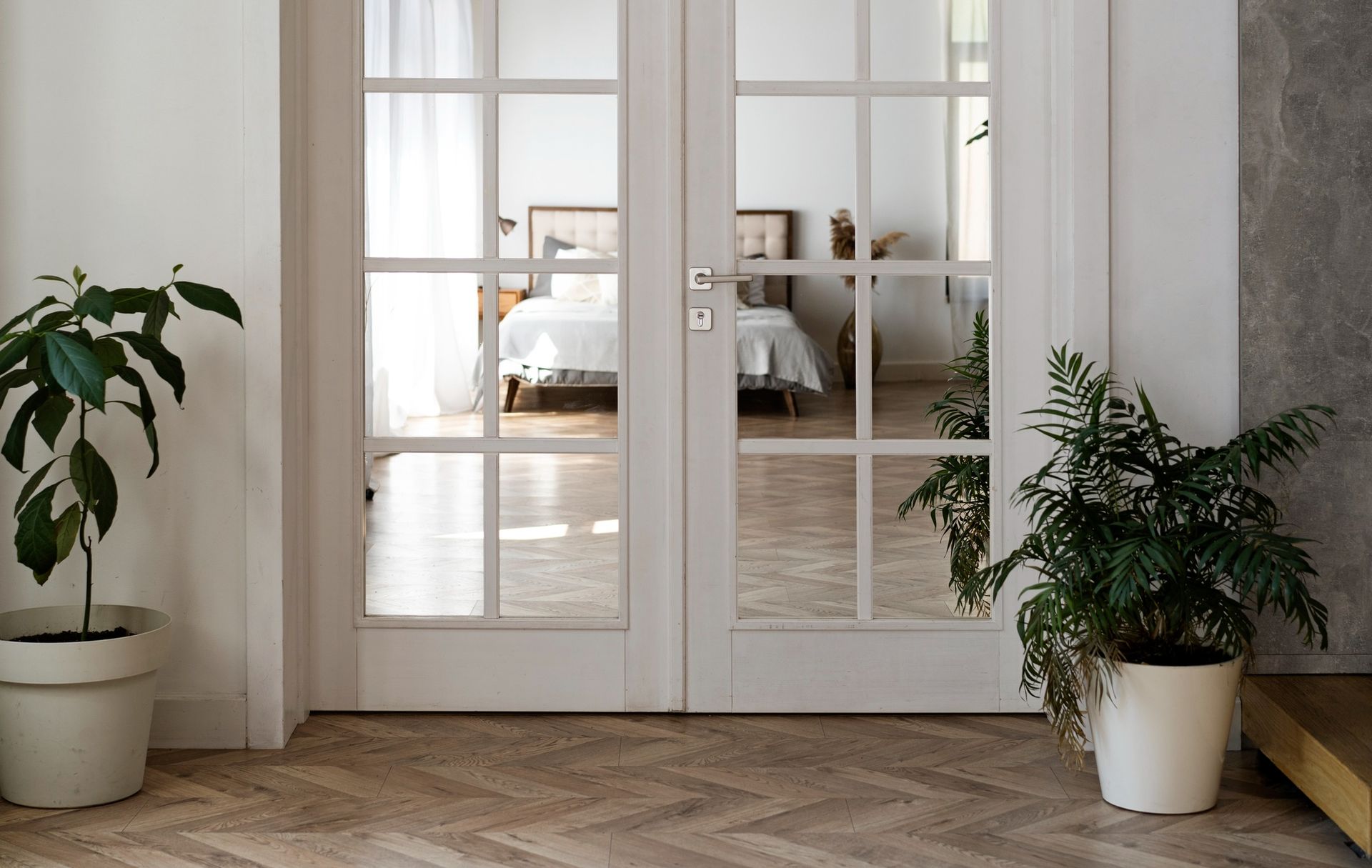
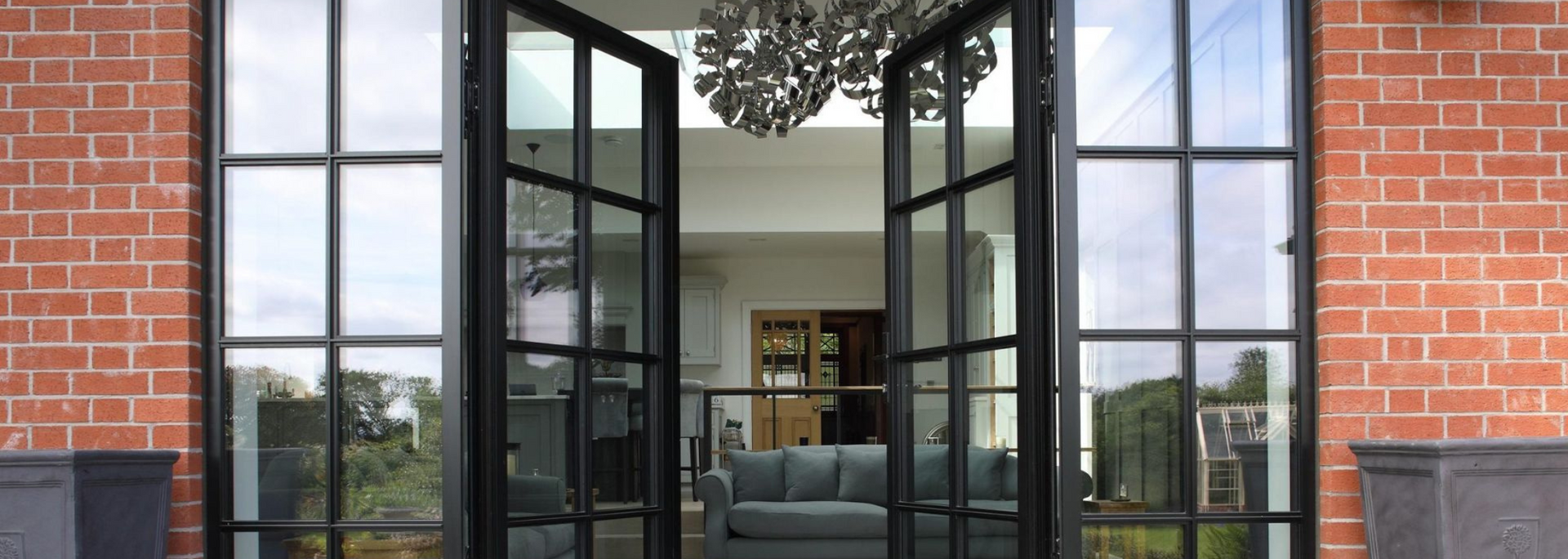
A regular hinged door, like French doors, needs a clear area to swing open. For a pair of French doors, this space can take up a big part of the room. You have to keep furniture away from the door, which can affect how you arrange a small kitchen or dining room.
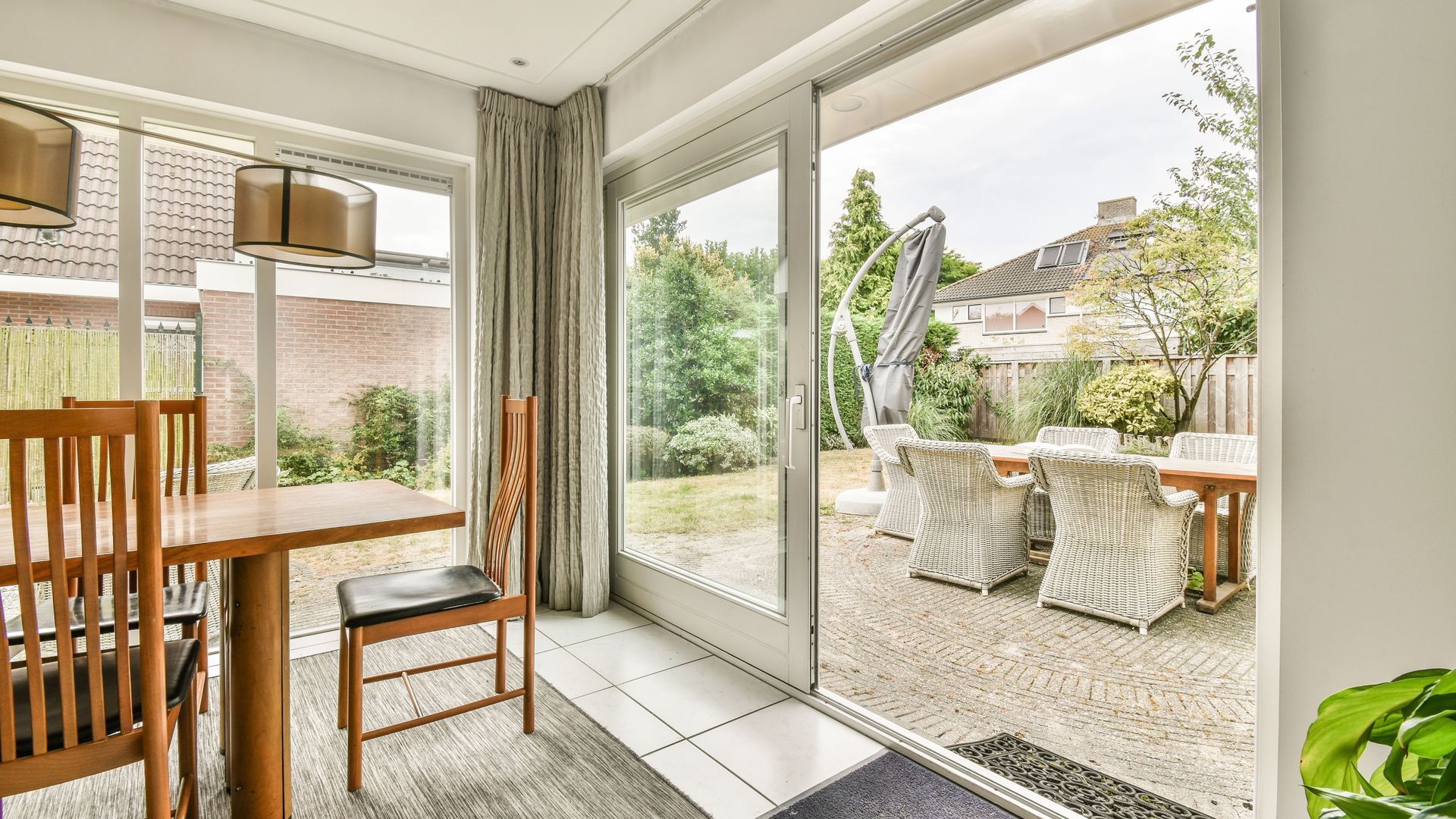
A sliding door solves this problem. The panels move along the wall, so you can put furniture right up to the door frame. You can place a dining table near the glass or have a kitchen island close to the opening without blocking the way. You can arrange your room however you want to use it, not based on where the door swings.
There's also a visual benefit. A door that doesn't swing into the room keeps the view clear. You can look straight through the glass to the garden, which makes both the room and the garden feel bigger.
Sliding doors vs French doors vs bifolds: which works best in a tight space?
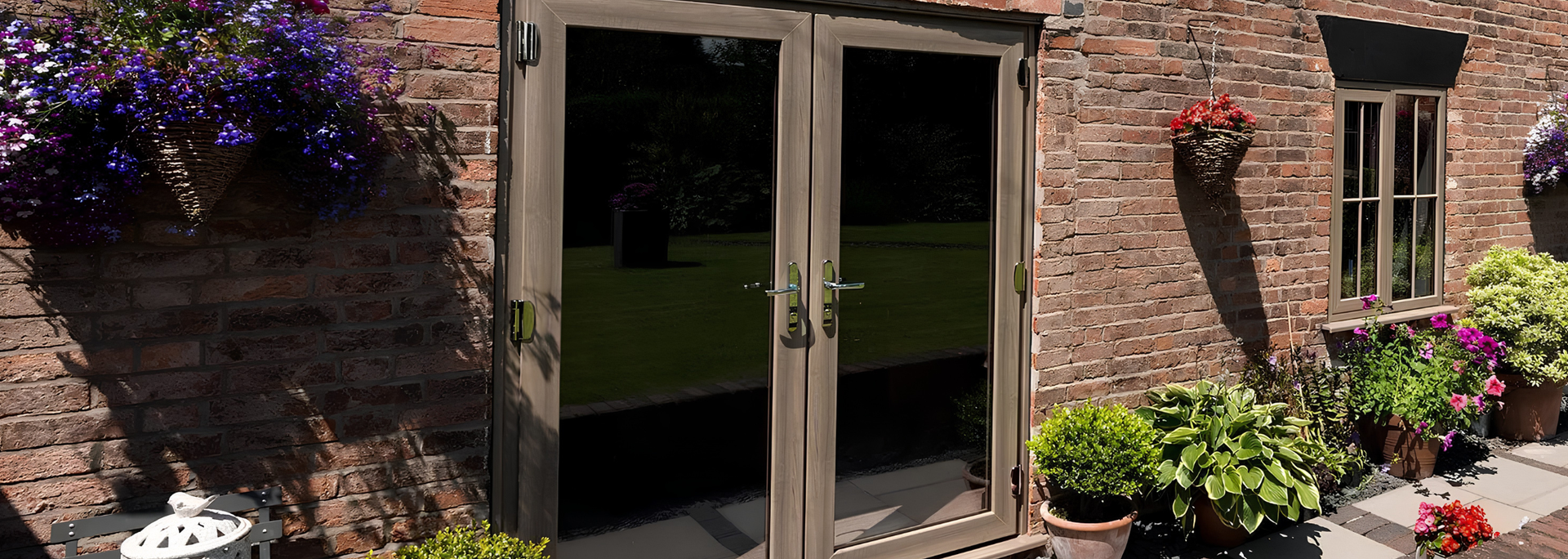
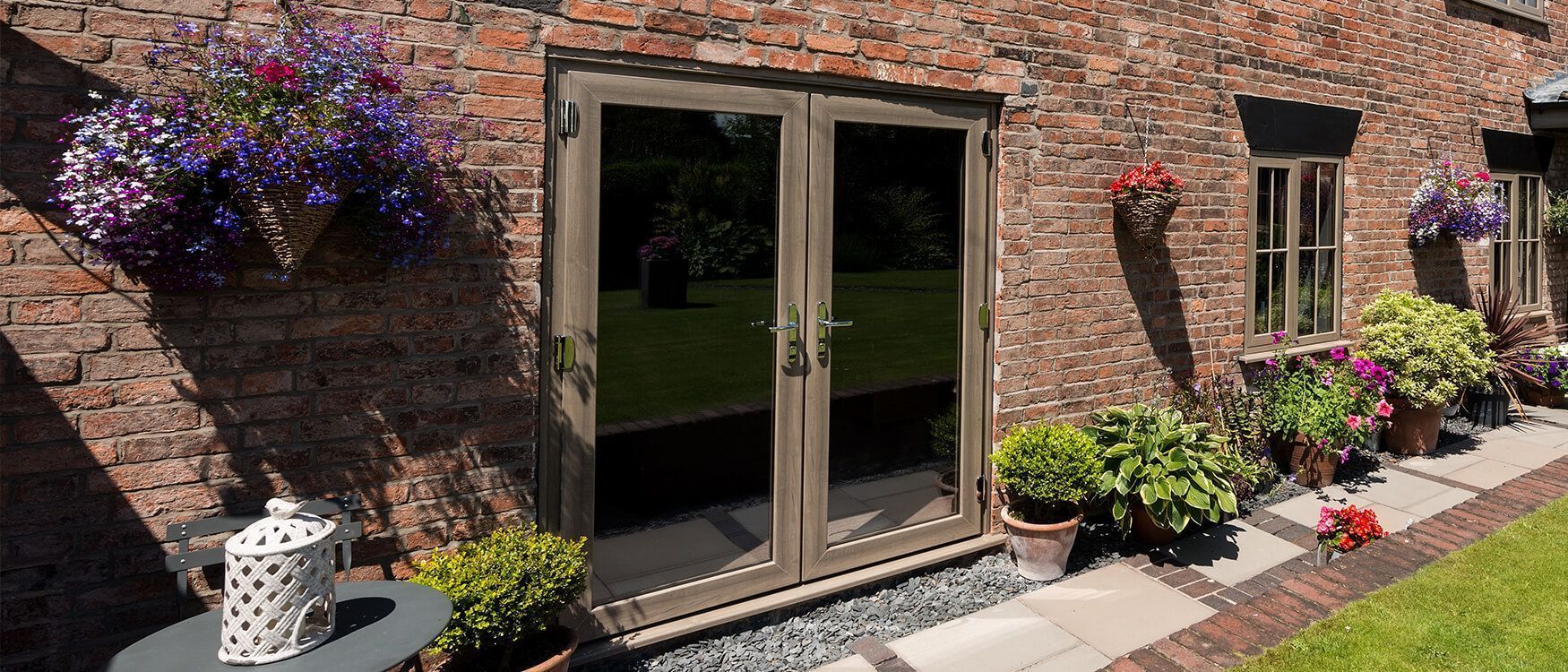
French doors are a popular choice, particularly for older homes, but they can swing either inward or outward. On a narrow patio, an outward-opening French door will obstruct the space whenever it is opened.
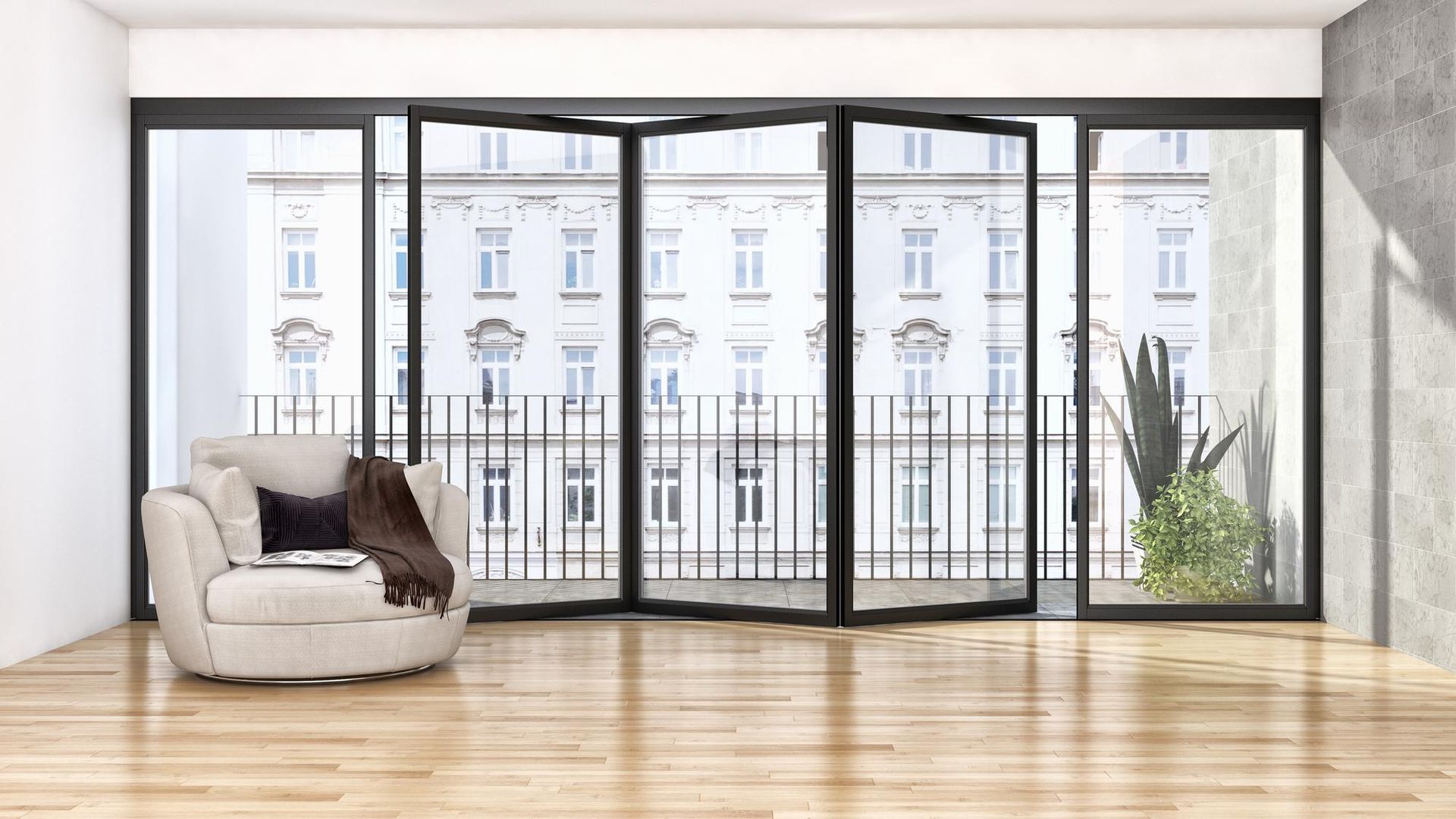
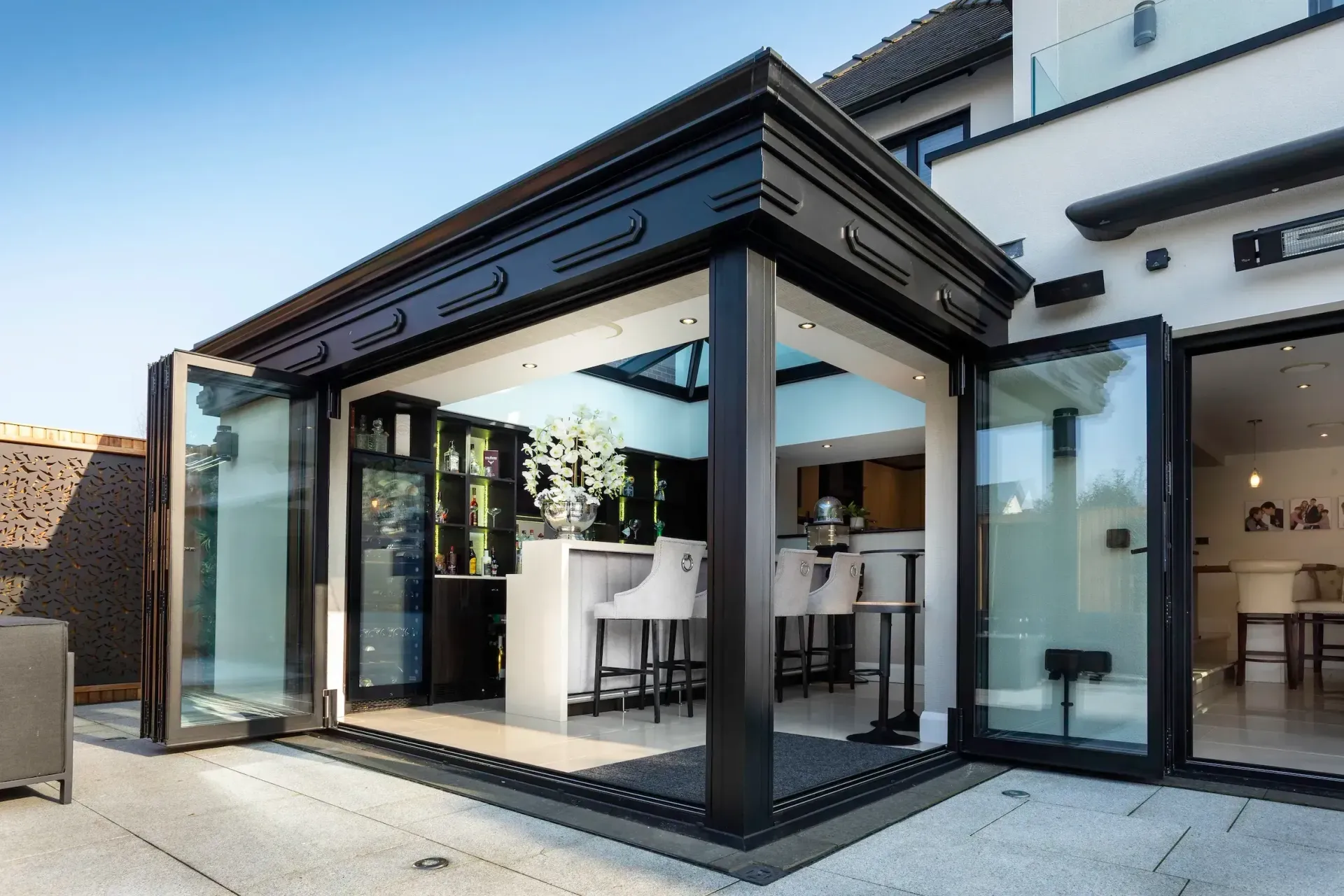
Bifold doors fold back concertina-style to create a wide opening. However, the folded panels need somewhere to stack, either inside the room or on the patio. In a compact space, that stacking requirement can be a constraint.
Sliding doors open wide, require no stacking space and do not encroach on the patio. For homes with small gardens or compact rooms, they are consistently the most sensible choice.
How slim frames and large glass panels change the feel of a room
Sliding patio doors do more than just work well. They also change how your space looks.
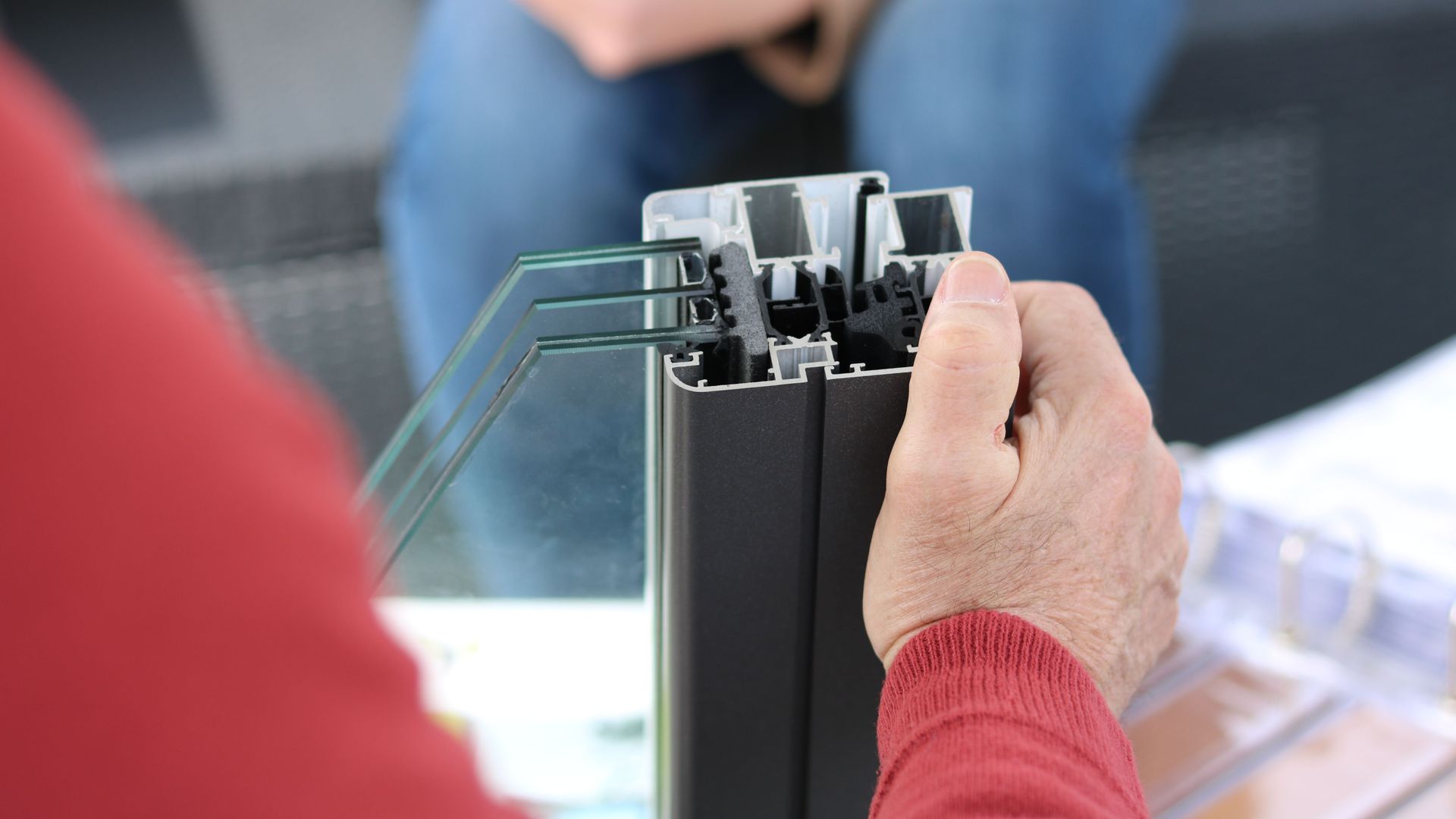
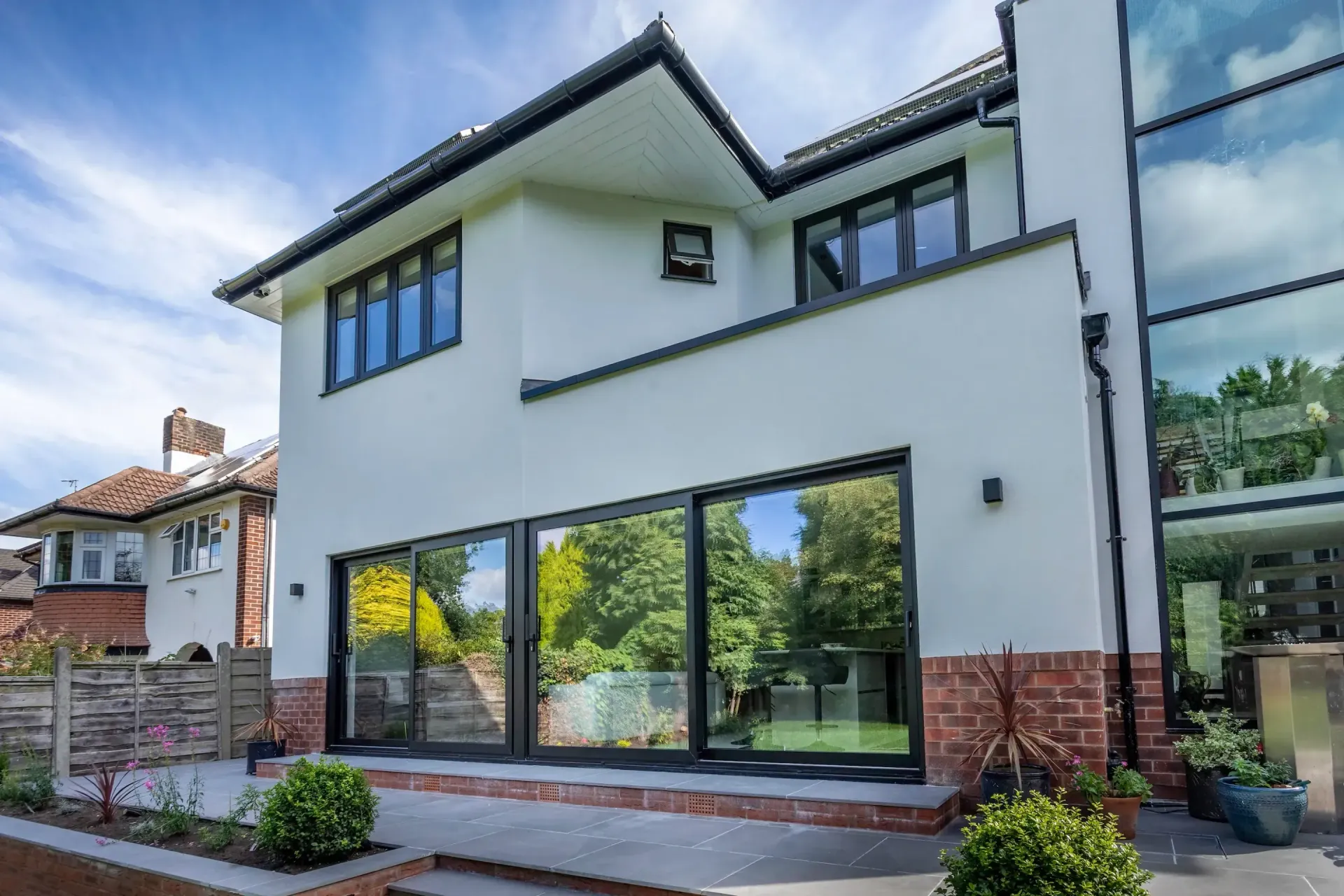
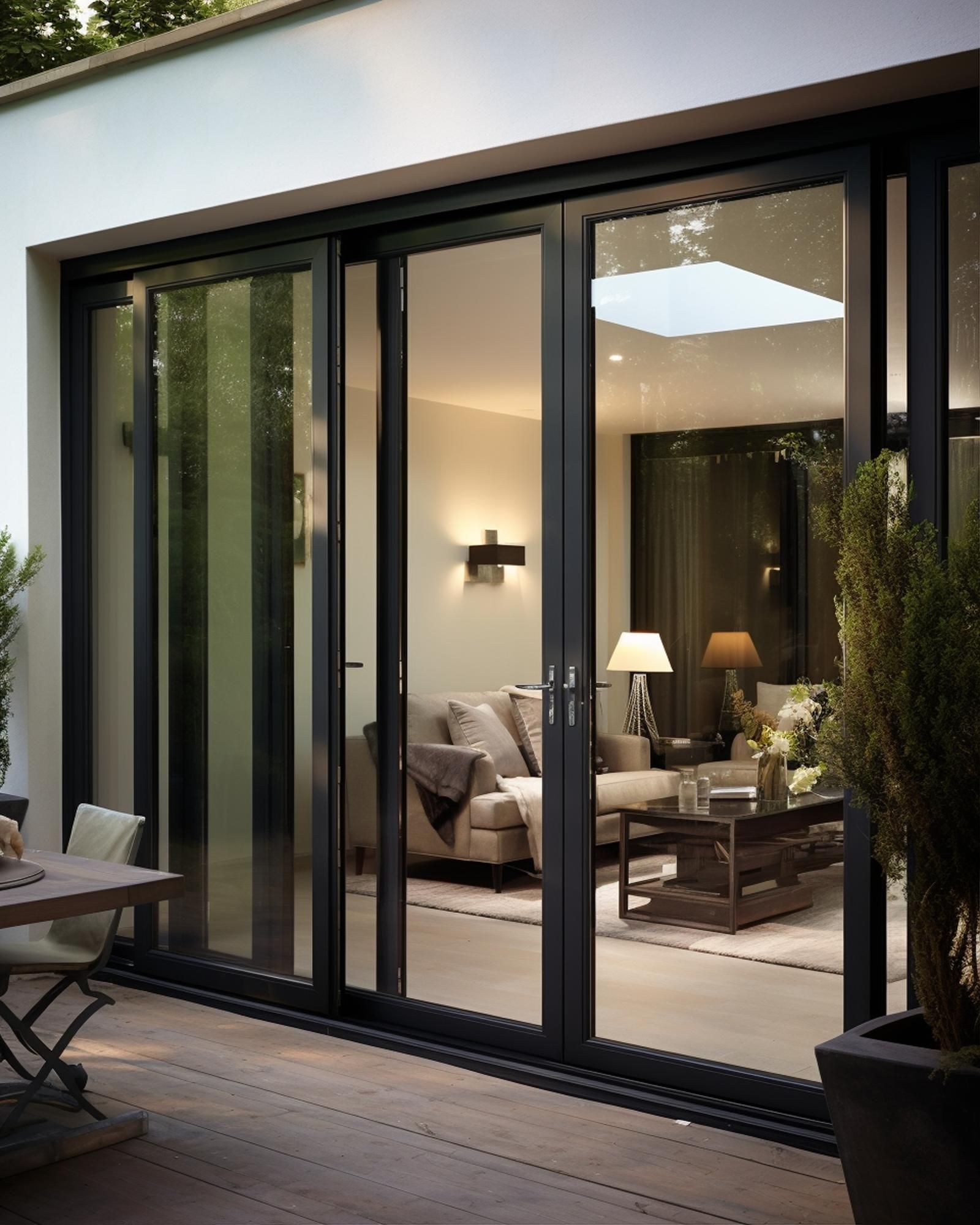
Modern sliding doors, especially aluminium ones, have very slim frames. Older designs had thick frames that broke up the glass, but today's aluminium doors can have frames as narrow as 70mm. With more glass and less frame, the room feels more open, even when the door is closed.
A big glass door lets natural light fill the room. In a north or east-facing room that doesn't get much sun, a well-glazed sliding door can make the space feel much brighter and more welcoming. In places like West Yorkshire, where it's often cloudy, making the most of natural light is a practical need, not just a design choice.
The view is important, too. Slim frames give you a clear view of the garden. Even a small, well-planted outdoor area looks much better when framed by thin glazing rather than a thick frame. The glass feels like open space, making the room and garden seem bigger, even with the door closed.
The kitchen-to-garden door: a particularly good use case
Direct access from the kitchen to the garden is one of those things that's hard to appreciate until you have it. It removes the walk via the hallway. It makes outdoor cooking and entertaining more practical. And it turns the garden into something you use casually rather than visit deliberately.
Kitchens in smaller homes are often tight. A sliding door at the rear brings in light, opens the space visually and creates a connection between the two areas that changes how both feel. A low or flush threshold between the internal floor and the patio further strengthens that connection, making the garden feel like a genuine extension of the room.
Configuration options: two, three and triple track
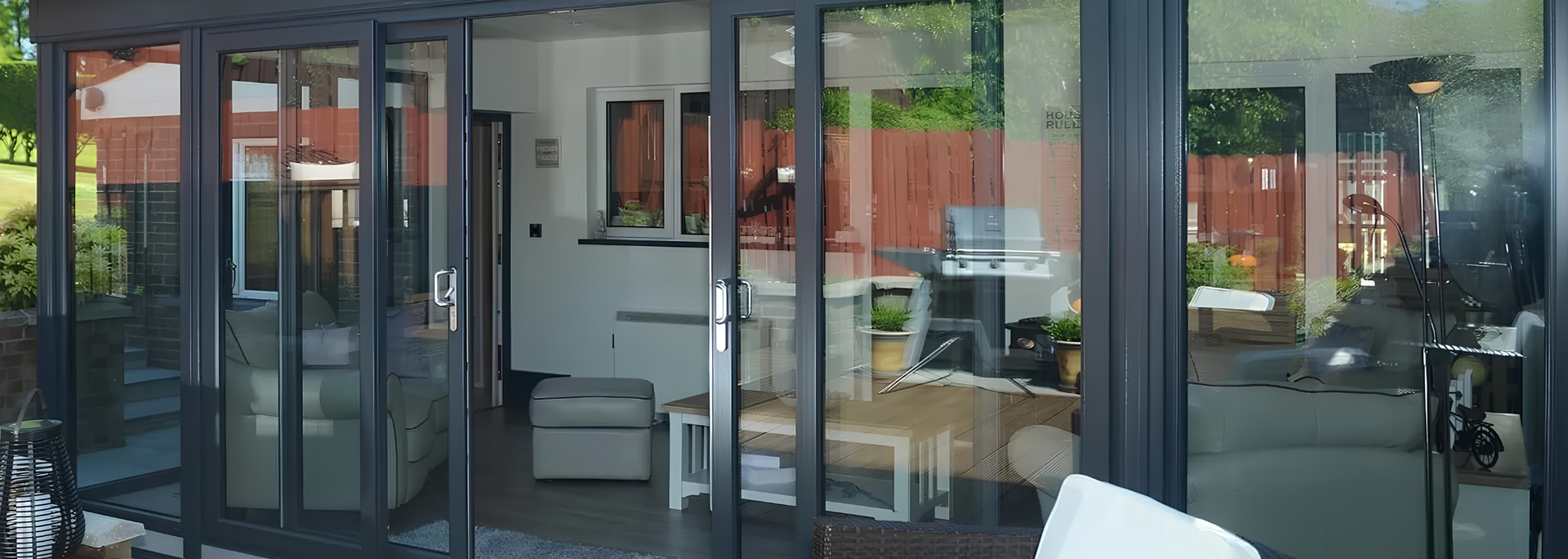
A two-panel system is the standard option: one fixed panel and one sliding panel, producing a clear opening roughly half the frame width. It suits most standard openings and is the simplest and most affordable choice.
A three-panel system allows two panels to slide in the same direction and stack behind the fixed one. This gives a wider opening from the same overall frame width.
The triple-track system goes further still, with three panels on separate tracks. This means there's no fixed panel – all three panels can move and stack independently.
Panels up to 2,000mm wide are available on some systems. That makes the triple track a suitable alternative to a bifold door in cases where a wide opening is needed without the stacking requirement.
The lift and slide option: when the opening is wide
For bigger openings, lift-and-slide doors are the top choice among sliding doors.
Lift-and-slide doors work differently from regular sliding doors. When you turn the handle, the panel lifts a little off the track. That makes it slide much more easily, even if it's big and heavy.
These doors can be over three metres high and wide, making them a good option for large extensions, just like bifold doors.
Lift-and-slide doors also feature a handy night vent. You can lock the door slightly open to let in fresh air without worrying about security. This is especially useful on summer evenings, and it's something standard sliding doors don't offer.
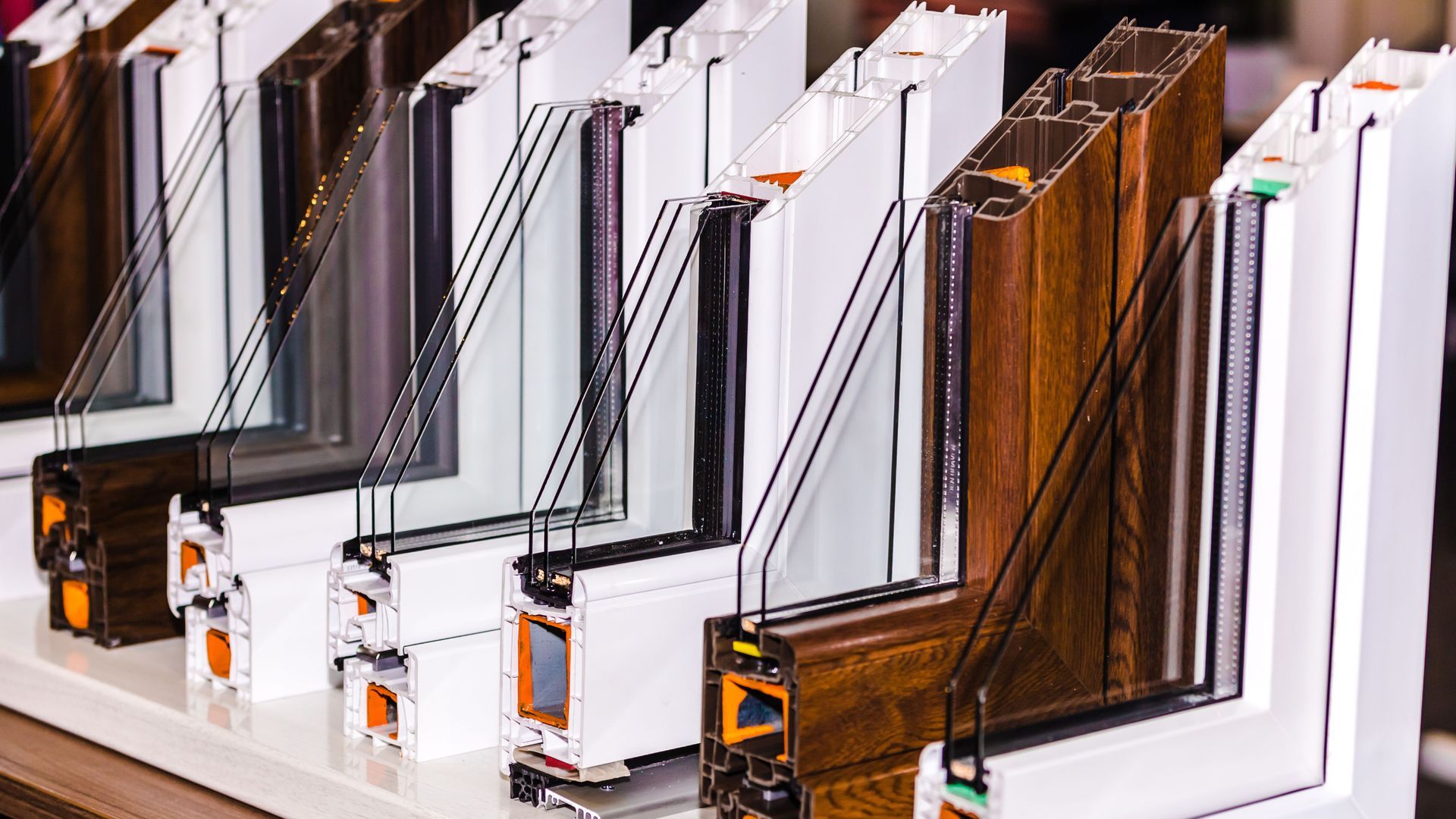
Lift-and-slide doors are also good for insulation. Double glazing can achieve U-values of 1.3 W/m²K. Triple glazing, meanwhile, can reach as low as 1.0 W/m²K, meeting or exceeding current building regulations.
Sliding patio doors at Calder Windows
At Calder Windows, we supply and install a wide range of sliding patio doors across West Yorkshire, including:
- Standard two-panel inline sliders
- Triple-track systems
- Premium lift-and-slide doors
You can choose uPVC or aluminium, with a wide range of RAL colours and dual-colour options to match your home.
All our sliding patio doors come with multi-point hook-bolt locks and Yale Platinum 3-star cylinders as standard. Our experienced local team handles every installation, and we back our work with a 10-year warranty. As a FENSA-registered company, your installation is independently certified when finished.
If you're replacing an old patio door or adding a new one as part of a kitchen renovation or extension, we're happy to visit, take measurements, and give you a clear, no-obligation quote.
Take a look at our sliding patio door range to get started. Or why not get in touch to arrange a no-obligation consultation at a time that suits you?
Recent Posts