Yorkshire sliding sash windows
Sliding sash windows
If you live in a Victorian terrace in Harrogate, a Georgian townhouse in Wetherby, or a stone frontage in Ilkley, the original window was almost certainly a vertical sliding sash. Replacing it with anything else changes the face of the building.
Our Yorkshire sliding sash windows keep the heritage look and bring it up to modern thermal and security standards. Slim sightlines, proper deep bottom rails, mechanical joints instead of welded corners, and authentic furniture. From the street, you’d struggle to tell them apart from freshly-painted timber.
Why sash windows matter in Yorkshire
Sash windows were everywhere in Yorkshire’s industrial and Victorian housing boom. Terraces in Leeds, Wakefield, Bradford and Huddersfield went up by the thousand, and nearly every one had vertical sliders. Many are still there. Many have been replaced badly with chunky casements that ruin the street scene.
A proper sash window replacement puts the building right. It also keeps you warm, secure, and draught-free in ways original Victorian timber never could.
For Victorian and Edwardian terraces
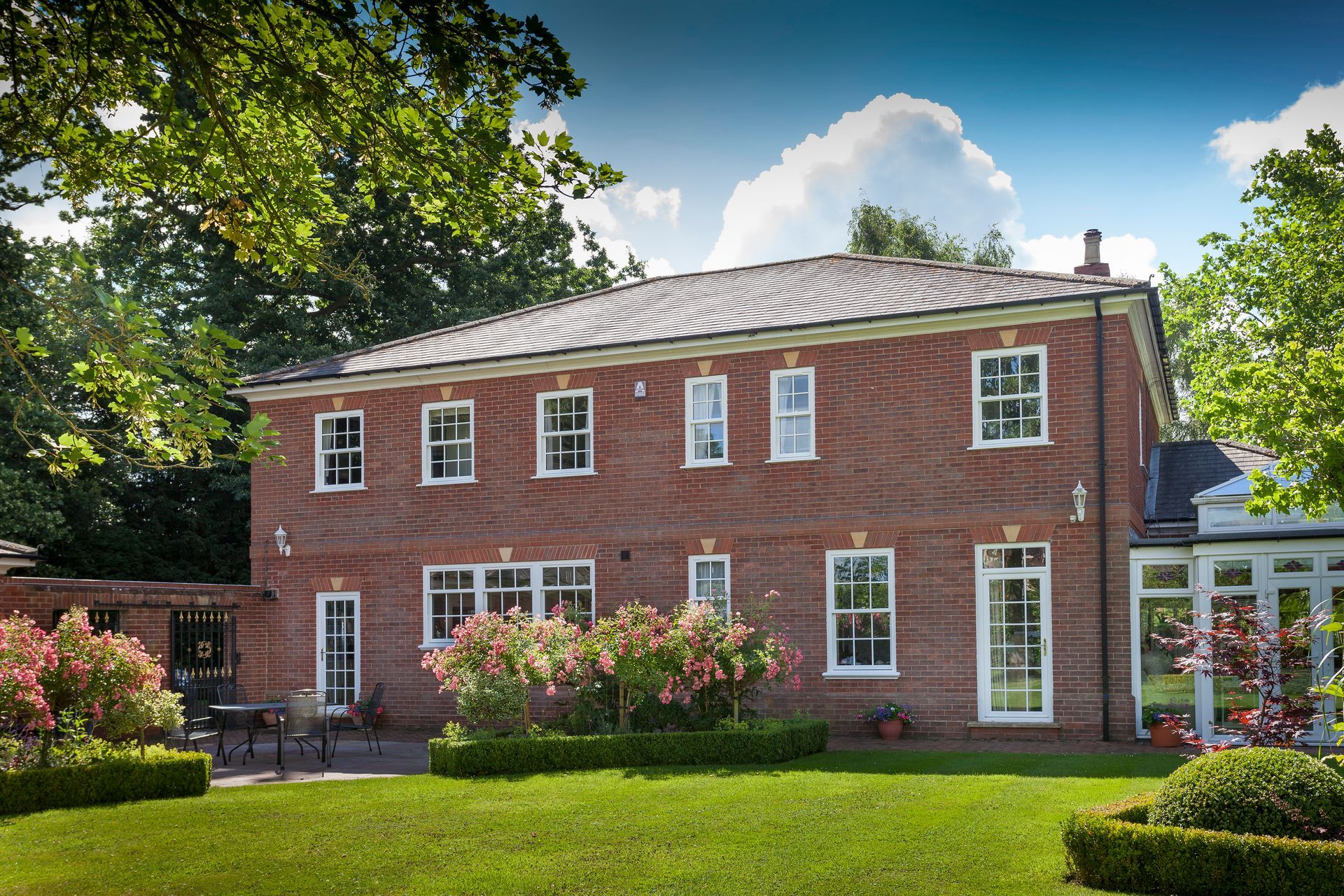
These are our most common sash window jobs. The original 2-over-2 or 6-over-6 pattern is almost always worth preserving. We replicate it in uPVC with astragal bars or lead-effect where needed.
For Georgian townhouses
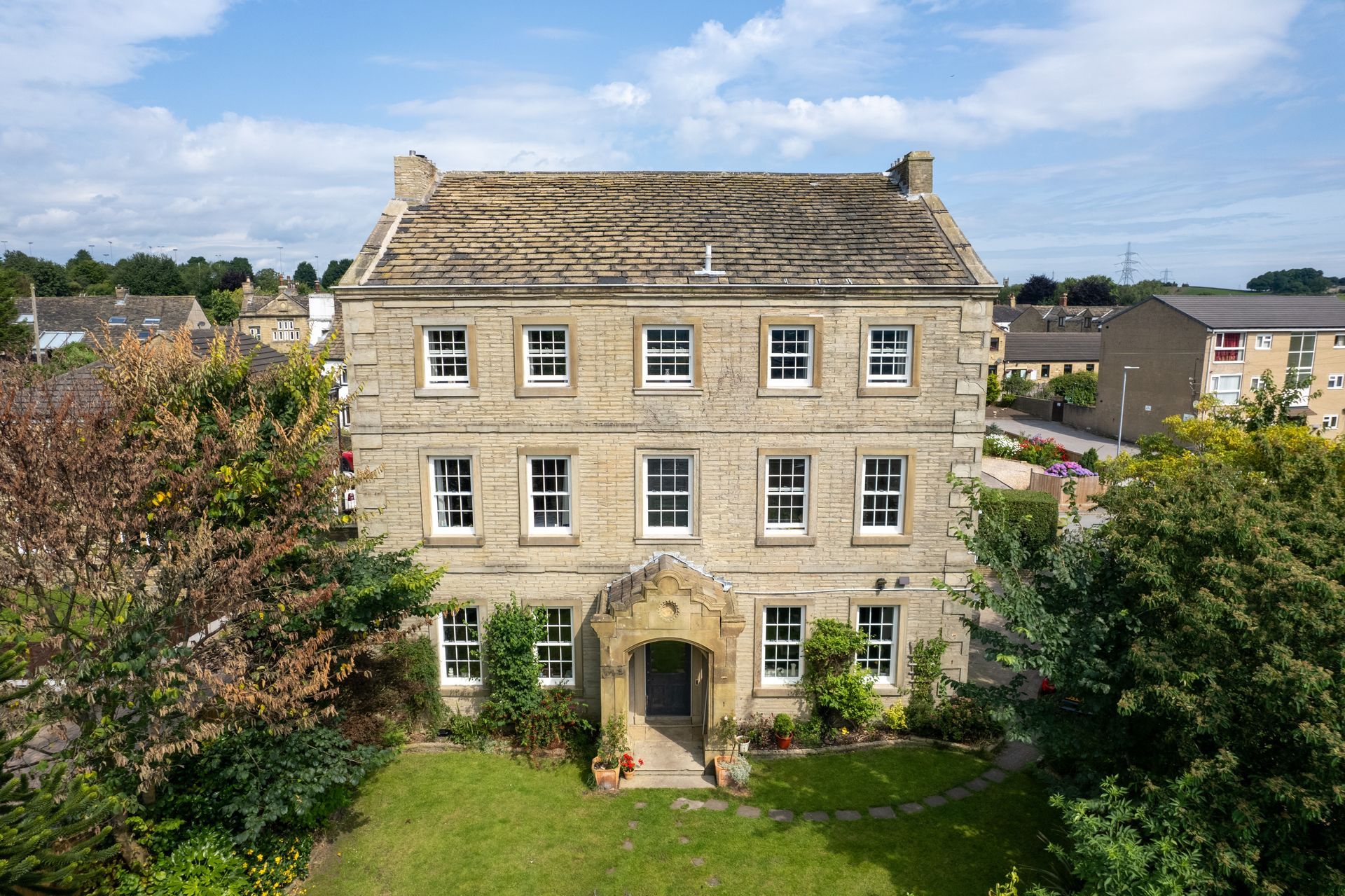
Taller, slimmer sashes with more panes and thinner glazing bars. We handle these too. The proportion is critical, so we survey carefully and order to exact opening sizes.
For stone cottages and conservation areas
In many conservation areas across West Yorkshire, the planning authority will allow uPVC sliding sash where they wouldn’t allow a casement. We’ll check local rules before we quote, and we’ll point you towards timber if that’s what the planning officer requires.
What we give you that cheaper sash windows don’t
Authentic profile and sightlines
Deep bottom rails, mechanical joints at the corners instead of welded mitres, slim glazing bars, and profiles that sit at the right depth in the reveal. The detail is what sells the illusion.
Smooth operation
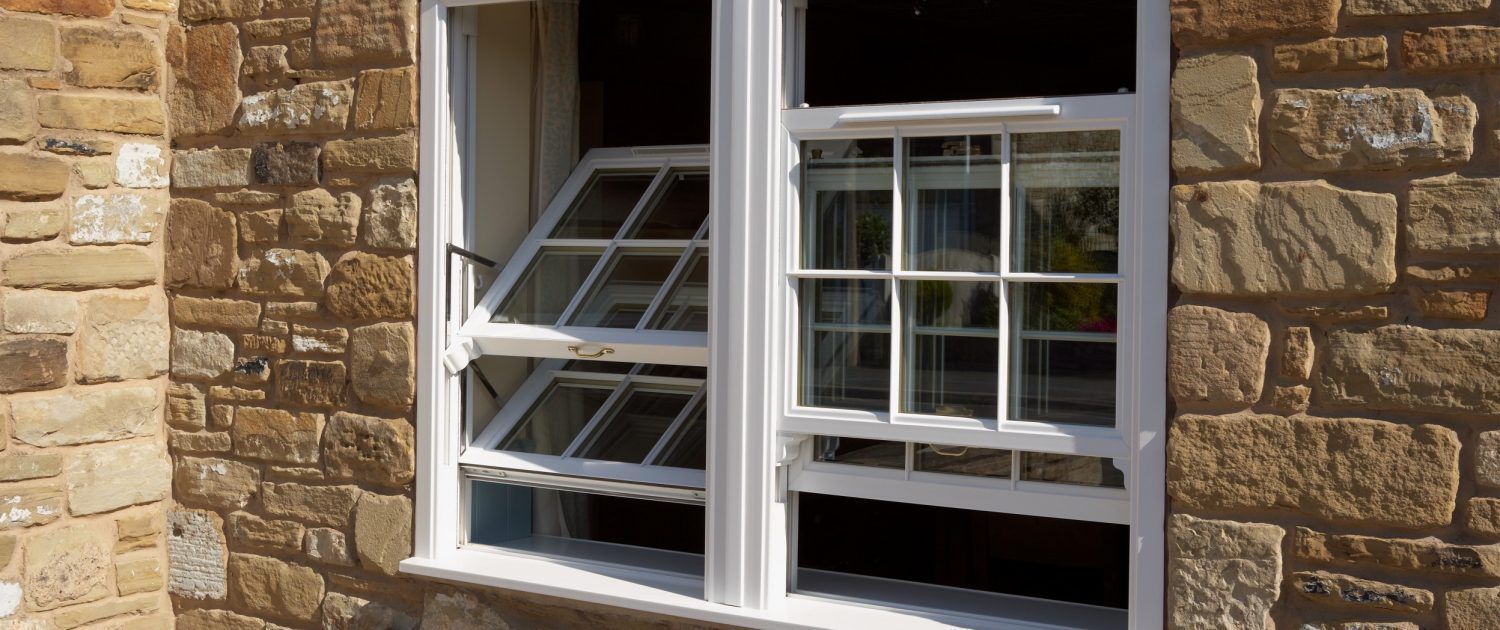
Modern spring-balanced sashes that glide up and down without the weights and pulleys of original timber. Tilt-in cleaning mechanisms on most ranges so you can clean the outside from inside.
Proper hardware
Monkey-tail handles, sash lifts, sash stops, and traditional locks. Chrome, brushed, black, or antique finishes depending on the period of the property.
Modern performance
A-rated double glazing as standard, with slim sightline options for conservation areas where deep units aren’t allowed. 40mm triple glazing available on wider frames where the building takes it.
Colours, finishes and detailing
- Heritage colours: white, cream, chartwell green, black, agate grey, rosewood
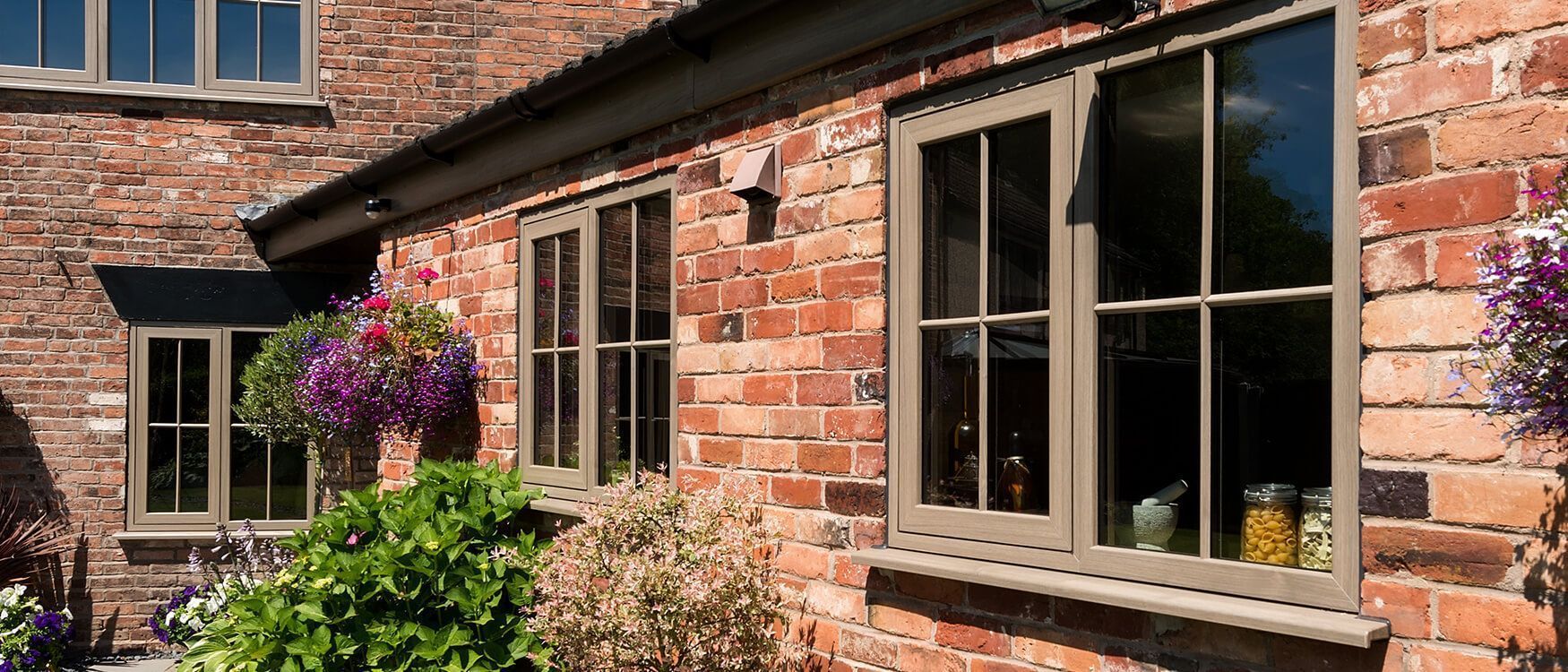
- Woodgrain finishes: Irish oak, light oak, winchester for convincing painted-timber effect
- Handles: monkey-tail, sash lifts, black, chrome, antique bronze, polished brass
- Glazing bars: applied externally, internally, or both (through-the-glass) for maximum authenticity
- Glass options: clear, obscure, leaded, decorative, slim-profile for conservation areas
Installation with care for the building
Old window reveals are rarely square and almost never clean. Stone cills crack if handled wrong. Brick arches shift. Render over old timber frames has to come out without damaging the surrounding wall.
Our team knows how to handle all of this, because we’ve done it on over 1,000 projects. Every sash window install includes:
- Pre-install survey with photos, measurements, and a plan for tricky reveals
- Protection of floors and surrounding decor
- Careful removal of existing frames
- Precision fitting with levels checked at every stage
- Final seal, trim, and walk-through before we leave
A typical sash window install for a full house takes two to four days on site. FENSA-signed off, 10-year guarantee* on most products.
Where we fit sash windows
Our sash window work is concentrated in the places with the most period housing stock: Harrogate, Ilkley, Wetherby, Hebden Bridge, Saltaire, central Leeds, Wakefield, Huddersfield, Halifax, York, and the surrounding conservation areas.
Sash window FAQs
Will uPVC sash windows look like timber?
If they’re the right profile, yes. We fit ranges that have been developed specifically to replicate traditional timber sashes, with deep bottom rails, mechanical joints, and authentic hardware. Cheaper uPVC sashes don’t.
Are they allowed in conservation areas
Often yes, but always check. We’ll do the check for you before we quote, and we’ll be honest if timber is the only option
Can I get slim sightline double glazing?
Yes. For listed buildings and some conservation areas, slim sightline units are required to meet planning rules. We fit them.
Do sash windows tilt for cleaning?
Most of ours do. Both top and bottom sashes tilt inward for cleaning the outside from inside the room.
How long do uPVC sash windows last?
25 to 35 years for a well-fitted quality range. The glazing units may need replacement before the frames do.
Related window styles
Flush sash casement windows
Casement windows
Window colours and finishes
See a proper sash window up close
The difference between a good and a bad uPVC sash is all in the detail. Come to the showroom and see it for yourself.