Draught-proof doors: 4 solutions that actually work long term
Are you dealing with a draughty door? You've got solutions. Explore 4 of the best long-term fixes in our guide.

A draughty door is more than an annoyance. Cold air entering around the frame can make a room uncomfortable, increase heat loss and encourage you to turn up the heating. Yet replacing the entire door is rarely the first solution to consider.
The important thing is to understand why the draught is happening. A worn seal needs a different fix from a badly aligned door. Meanwhile, a gap beneath the door may have nothing to do with the door itself.
At Calder Windows, we stock high-quality doors built to withstand draughts. We recognise, however, that there may be steps you can take to dodge the draught before paying for a replacement.
In this guide, we look at how to deal with these pesky draughts. But first, why do doors become draughty in the first place?
Why do doors become draughty?
Doors become draughty for several reasons – and age is only part of the story.
The most common cause is degraded weather sealing. Rubber, foam or brush seals can become compressed, brittle or damaged over time. Once the seal no longer springs back against the door, gaps appear around the edges.
Another common issue is movement of the door itself. Hinges can loosen, doors can drop slightly or frames can move as a building settles. Even a few millimetres of movement can prevent a door from closing evenly against its seals.
You also need to consider the threshold. The bottom of an external door is particularly vulnerable to draughts because it must accommodate flooring, drainage and everyday wear. If the threshold is too low, damaged or poorly sealed, cold air can pass underneath.
Finally, some doors were simply poorly installed or specified in the first place. A door that never fitted its frame correctly may remain draughty despite having its seals replaced.
The key is to identify where the air is getting through before choosing a repair.
Four long-term fixes for draughty doors
1. Seal replacement
Replacing the seals is often the simplest and most cost-effective long-term solution.
Door seals sit between the door and frame and are designed to compress when the door closes. Over time, they can flatten, split, shrink or detach. Older seals can also lose flexibility, meaning they no longer create consistent pressure against the door.
A proper replacement starts with identifying the correct seal profile rather than simply sticking generic foam tape around the frame. Different doors use different types of seals, including compression gaskets, wedge seals, bubble seals and brush strips.
The replacement needs to fit correctly and provide the right amount of compression. Too little leaves gaps. Too much can make the door difficult to close and put unnecessary stress on the hardware.
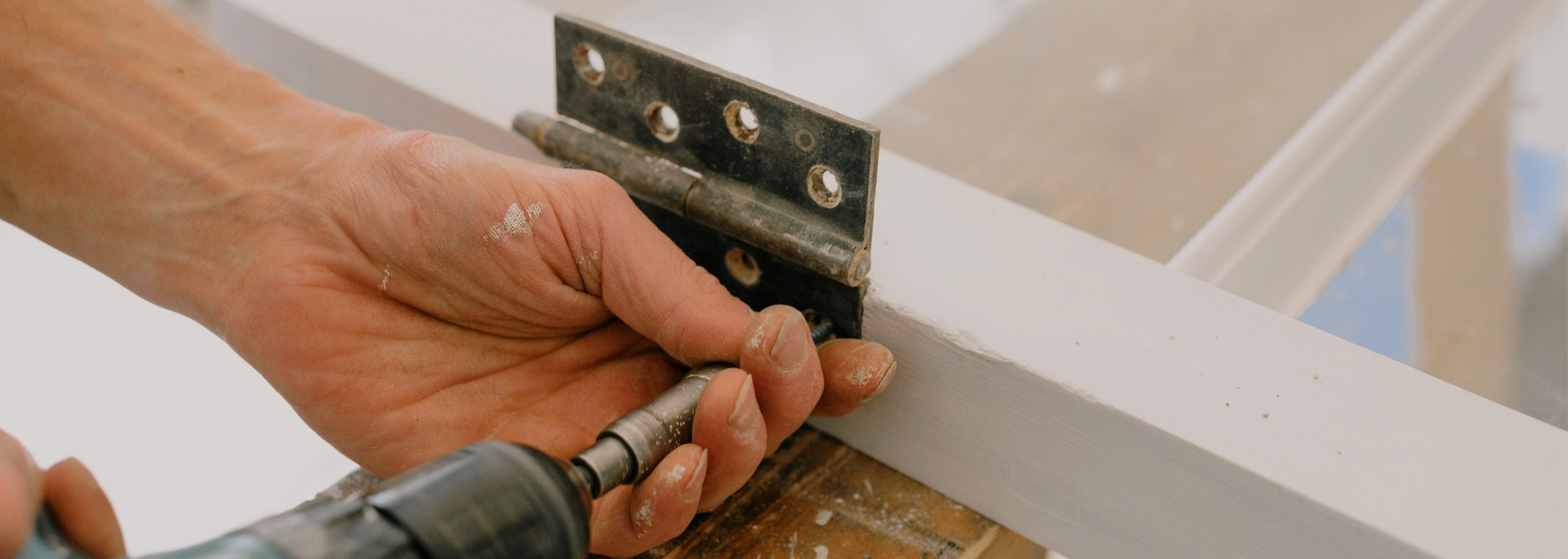
2. Hinge and latch adjustment
Sometimes the seal isn't the real problem. The door simply isn't sitting where it should.
Hinges carry the door's weight and can loosen or wear. As a door drops, the gap around it can become uneven.
You may notice that the door catches on the frame, requires more force to close or sits closer to the frame at one corner.
Adjustment can restore the correct position and let the seals compress evenly.
The latch and locking mechanism matter too. On many modern doors, particularly those with multipoint locks, the locking points pull the door tightly against its seals. If the door isn't engaging correctly, it may appear closed while still allowing air through.
Replacing seals on a poorly aligned door can therefore be a false economy. Correct the alignment first and
then
make sure the seals work properly.
3. Upgrading the threshold
If the draught is coming from the bottom of the door, the threshold deserves particular attention.
Thresholds take a beating. They're walked over, exposed to moisture and dirt and affected by changes to flooring levels. Older thresholds may also offer limited adjustment or sealing.
An upgraded threshold can provide a more effective barrier between the inside and the outside. Depending on the door, this might involve:
- An adjustable threshold
- A replacement threshold seal
- Giving the bottom of the door a more reliable sealing surface
4. Door drop adjustment
A door that's dropped slightly can cause both draughts and difficult operation.
Door drop can result from hinge movement, wear, changes in the frame or the weight of the door gradually affecting its position. On many modern doors, adjustable hinges let an installer alter the door's height, side-to-side position and compression against the frame.
If one corner closes tightly while the opposite corner has a visible gap, adding more sealant isn't necessarily the answer. Correcting the door's position can bring the entire perimeter back into contact with the existing seals.
The goal is consistent contact, not maximum compression. Over-tightening can make the door difficult to operate and put unnecessary strain on the hinges and locking components.
When is replacement the only honest answer?
In some situations, repair simply isn't the sensible long-term option.
If the door leaf is warped, badly damaged or structurally deteriorated, replacing the seals won't straighten it out.
Likewise, if the frame has moved significantly, is damaged or was installed incorrectly, adjusting the hardware may only disguise the underlying problem.
Replacement is also worth considering when several repairs have already failed. If the door requires repeated seal replacements, constant adjustment or increasingly elaborate fixes, the cost and inconvenience can eventually outweigh the benefit of keeping it.
The honest answer isn't that every draughty door needs replacing. In many cases, a seal, adjustment or threshold repair is all that's required. But when the door or frame is fundamentally defective, continuing to patch it up isn't a long-term solution.
Are you looking for high-quality draught-proof doors in West Yorkshire? We're ready to help. Get in touch with Calder Windows today to discuss your needs and request a free quote.
Recent Posts