
What are composite doors made of?
Ever wondered what goes into a composite door? Their construction is more interesting than you might think. Let's take a look inside.
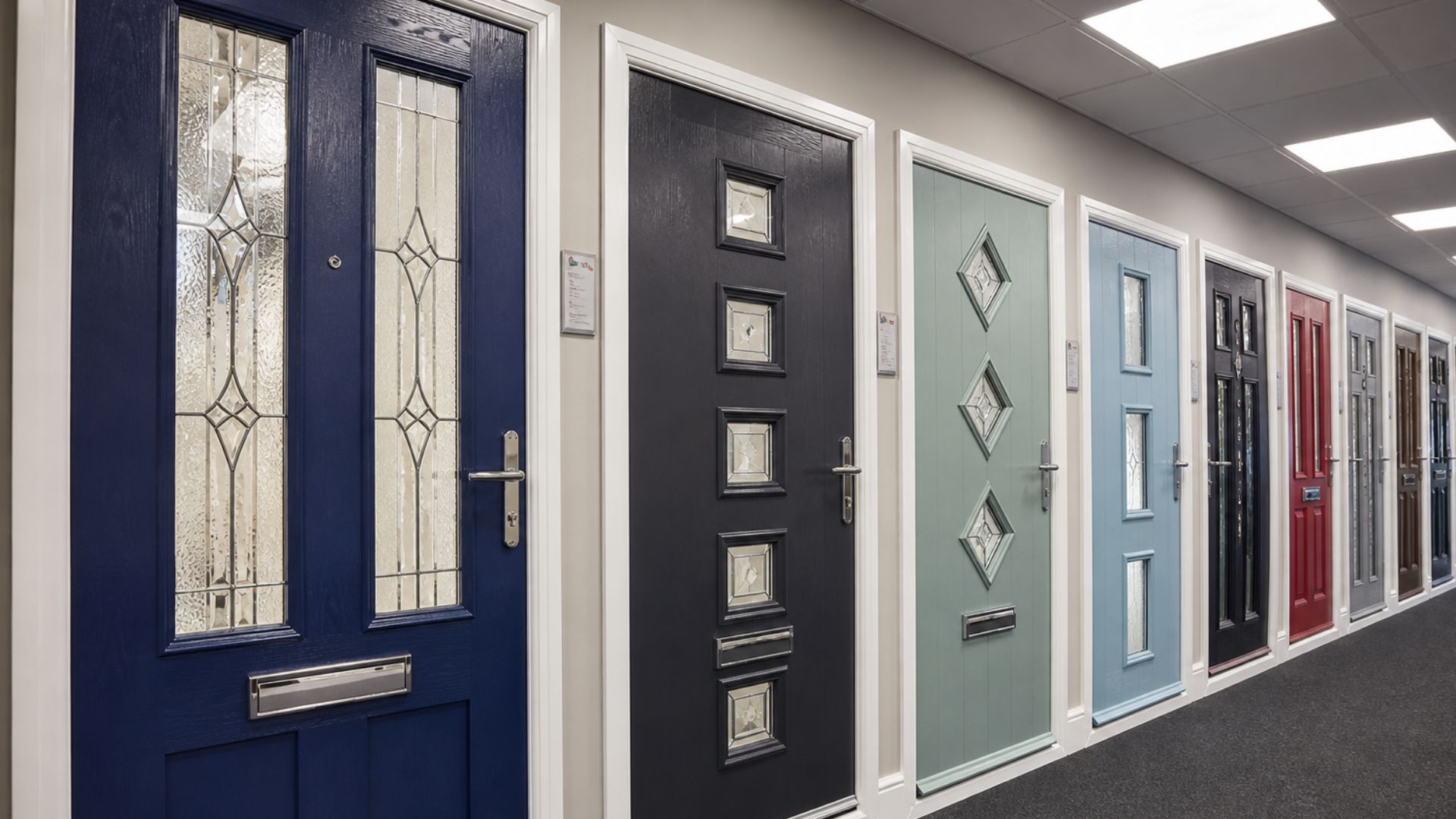
The word "composite" has several meanings. At its most basic, it means "made from more than one material". But you could also think of it as meaning "greater than the sum of its parts".
A composite door is built in layers, with each material chosen for a specific job that no single material could do on its own.
How each layer is bonded – and the quality of those layers – can vary significantly between manufacturers. Understanding the construction is the most reliable way to judge whether that specific door represents genuine long-term value.
In this article, we look at the materials typically used for composite doors. We hope it helps you understand how everything fits together and what to look for in a good composite door.
Composite door construction: the basics
Composite doors comprise four key layers, each with a different function. Together, they add up to improved strength, enhanced thermal efficiency and an attractive, solid appearance.
The key layers are:
- The outer skin: a weather-resistant coating, typically made of glass-reinforced plastic (GRP)
- The inner frame: usually made of uPVC or hardwood, this layer provides structural integrity
- The core: made of super-strong solid timer or high-density polyurethane foam
- The insulation: polyurethane foam is injected between the layers for extra thermal efficiency
This is why composite doors are much thicker than uPVC doors. The extra thickness makes room for all the materials that help them perform so well.
Most composite doors are 44mm thick, while some premium models are 48mm thick. In comparison, a standard uPVC door is about 28mm thick.
The outer skin: GRP and why it matters
The outer skin of most composite doors is made from glass-reinforced plastic (GRP), also known as "fibreglass".
GRP is formed by combining fine glass fibres with a polymer resin, producing a lightweight yet exceptionally tough material.
Thankfully, for those of us in rainy West Yorkshire, GRP resists moisture and does not warp or rot. An essential feature is the ability to withstand tough winter weather.
The skin is typically moulded using a sheet moulded compound (SMC) process. This involves pressing a mixture of glass fibres, resin and fillers into a heated mould under high pressure.
The result is a precisely formed panel with a consistent thickness and a detailed surface texture.
With this method, manufacturers can create realistic wood-grain finishes with details that painted uPVC doors can't match.
A gel coat is then applied over the GRP surface during production. This acts as the outermost protective layer, sealing the skin against UV exposure and helping the colour hold its depth over time.
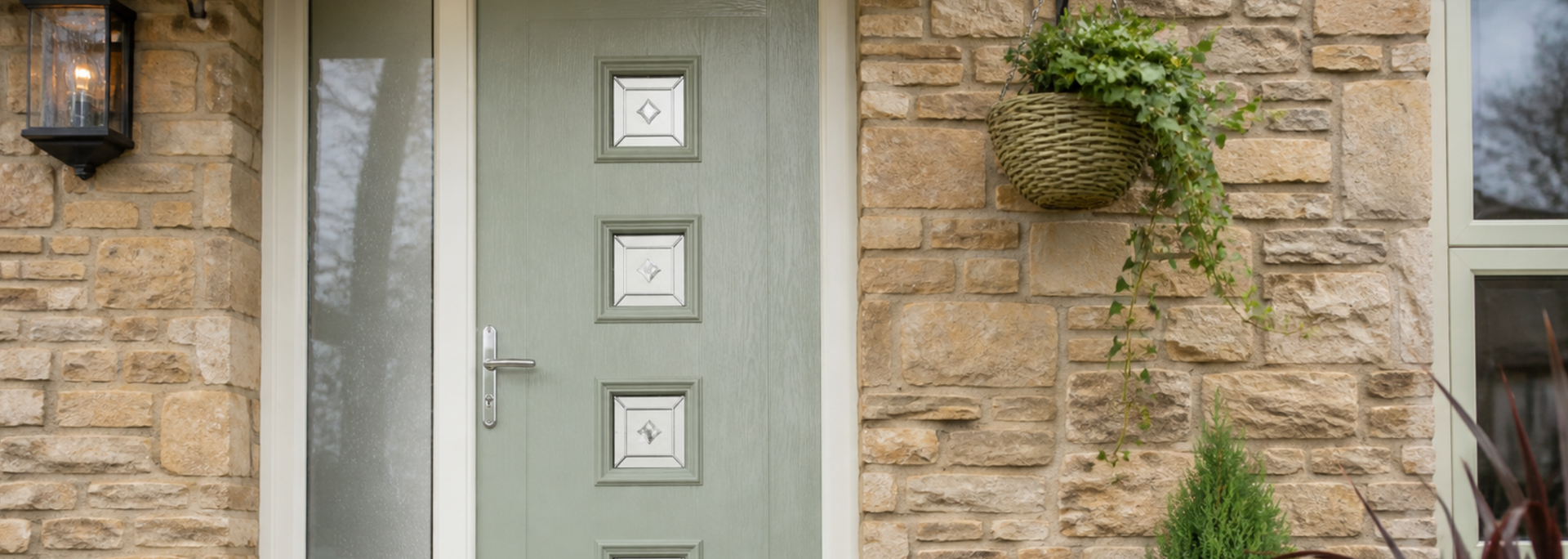
A quality gel coat should mean the door requires no repainting throughout its working life. In most cases, maintenance amounts to nothing more than an occasional cleaning with warm, soapy water.
Not all GRP is created equal…
It is worth noting that not all GRP skins are made to the same standard.
The thickness of the skin, the quality of the resin and the accuracy of the SMC process all affect how the door performs over time and how well it holds its appearance.
A thicker, well-formed skin will feel noticeably more solid and will resist minor impacts, such as knocks from bikes or wheelie bins, far better than a thinner alternative.
The core: polyurethane foam vs solid timber
Inside the door sits the core, where much of the thermal performance is generated.
The most common core material is high-density polyurethane (PU) foam, which is injected into the door cavity during production.
PU is a significantly better insulator than solid timber on a volume basis. Foam-core composite doors can achieve low U-values and contribute substantially to a home's energy efficiency.
The alternative is an engineered timber core, often made from laminated veneer lumber (LVL). This consists of multiple thin layers of wood bonded together under pressure, producing a stable core that resists the movement associated with solid timber.
Timber-core doors tend to feel heavier and are a good choice if you want a solid, sturdy door.
Both have merit. The right choice depends on your priorities for your home.
The inner frame: stiles, rails and structural reinforcement
Around the core sits the structural frame: stiles running up and down each side and rails running horizontally at the top and bottom.
These are commonly made from a water-resistant polymer or engineered timber, often reinforced with LVL for added solidity.
The lock edge is typically reinforced with a steel or aluminium strip running the full height of the door. This supports the multi-point locking hardware and resists any break-in attempt.
How it all gets bonded together
The layers of a composite door are bonded together using an industrial-grade adhesive resin, typically a urethane-based product.
This creates a single, solid structure rather than separate parts, helping it stay strong and secure.
The process is carried out under regulated factory conditions, with consistent pressure applied across the full face of the door.
The door frame: uPVC, timber and beyond
The door itself fits into an outer frame, which is often made of uPVC. These frames are low-maintenance, keep heat well, and come in many colours.

The frame is fixed directly to the property, and its quality matters just as much as the door itself. Even the best door won't perform as it should if the frame is not fitted properly.
Glazing in composite doors
Glazed panels in composite doors are usually double or triple-glazed and manufactured to EN1279 standards.
Low-emissivity (low-E) glass is standard. With low-E glass, a microscopic metallic coating reflects heat back into the room rather than allowing it to escape.
The cavity between panes is usually filled with argon, while warm-edge spacer bars reduce cold bridging at the glass perimeter.
Higher-quality composite doors use a glazing cassette system, so you can replace the glass from within your home. This is a useful feature for the long term.
The benefits that come from getting the materials right
Weather resistance
A well-constructed composite door holds its shape across decades of British weather without warping, swelling or fading.
This stability comes from the materials used. The GRP skin does not absorb moisture, the polyurethane core does not break down, and the reinforced frame stays strong even after years of use.
Low maintenance requirements
The GRP skin also means you don't have to paint, varnish or worry about the door swelling with the seasons.
Typically, all you need to do is clean the door with warm, soapy water. For most people, this low-maintenance feature is a real plus, saving time year after year.
Thermal efficiency
Thermal performance represents another area where material quality pays dividends.
A composite door with a high-density foam core, quality glazing and a well-sealed frame can have a U-value well below 1.8 W/m²K. That's the current building regulation limit.
Remember: U-values measure thermal efficiency – and a lower U-value is better.
Strength and security
Composite doors are much more secure than uPVC doors. The reinforced lock edge, dense core and solid structure make them very hard to break into.
Combined with a quality multi-point locking system, a well-specified composite door is a serious deterrent.
Composite doors at Calder Windows
At Calder Windows, we have supplied and fitted composite doors in West Yorkshire for more than 30 years.
Our composite doors are fitted with either Yale or Winkhaus locking systems, both of which carry Secured by Design accreditation.
We are FENSA-registered, and every installation comes with a 10-year warranty, clear advice and fair pricing. We never use high-pressure sales tactics.
So, if you're looking for a high-quality door, friendly service and excellent aftercare, why not browse our range today? If you have any questions, we are always happy to help – just get in touch.



Get a FREE quote
Are you on the lookout for uPVC window fitters in Wakefield or West Yorkshire? With over 30 years' experience and an extensive range of uPVC windows, we can help. Request a quote today or apply for finance and spread the cost.