How to adjust uPVC doors
Is your uPVC door looking a bit skew-whiff? Learn how to adjust rattling, catching, and draughty uPVC doors.
Need to adjust a
uPVC door but don't know where to start?
It's one of those jobs you know you can probably do yourself – but you just need to take a few minutes to learn how. That's where we can help.
Check out our DIY guide below and you'll learn how to adjust
uPVC doors so that they don't rattle, catch on the floor or let a draught through.
Remember: before you adjust your uPVC door, check if you have a manufacturer's guarantee or warranty. You don't want to invalidate it unnecessarily and the manufacturer may provide aligning services.
Why do you need to adjust uPVC doors?
These doors typically get used a lot, so it's not uncommon for the doors to drop or become loose in their hinges as time goes by. This is why you need to check your hinges regularly to see if any adjustments need to be made and keep your door in the right position in its frame.
How do you know a uPVC door is misaligned?
Here are some essential checks to identify if and where your door is misaligned:
Check the corners of the door – their mitres must line up with the mitres of the doorframe. Get a spirit level and place it on top of the door to see if it's straight. Open the door a bit and look at the lock side to see if the gap between the door and the frame is consistent from the bottom to the top.
How do you know if the door is warped?
Cheap uPVC doors can be prone to warping.
You can usually tell a door is warped when it meets the frame at the top and bottom but leaves a gap in the middle. Replacing it is probably the best thing to do in this situation.
If the door meets the frame at the top but leaves a gap at the bottom, it may simply need a hinge adjustment to get it back to its usual shape.
What hinges do uPVC doors have?
If you've discovered your uPVC doors are out of alignment, you must identify which type of hinges are fitted. Each type needs to be adjusted in a slightly different way.
Butt hinges
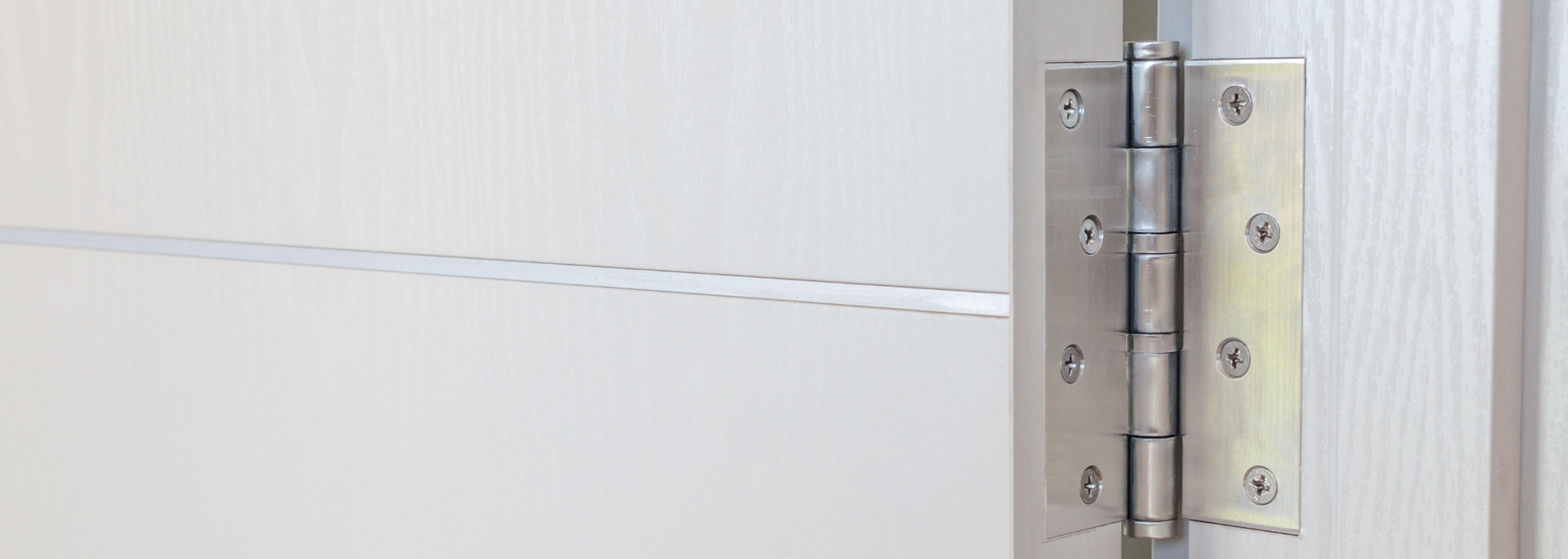
These old-school hinges look like rectangles with a hinge from a smaller rectangle in the middle.
They're usually found in early designs of uPVC doors but are still common nowadays. The adjustments vary depending on how old the hinge is, with some allowing for lateral adjustment, lateral and vertical adjustment or no adjustment whatsoever.
Flag hinges
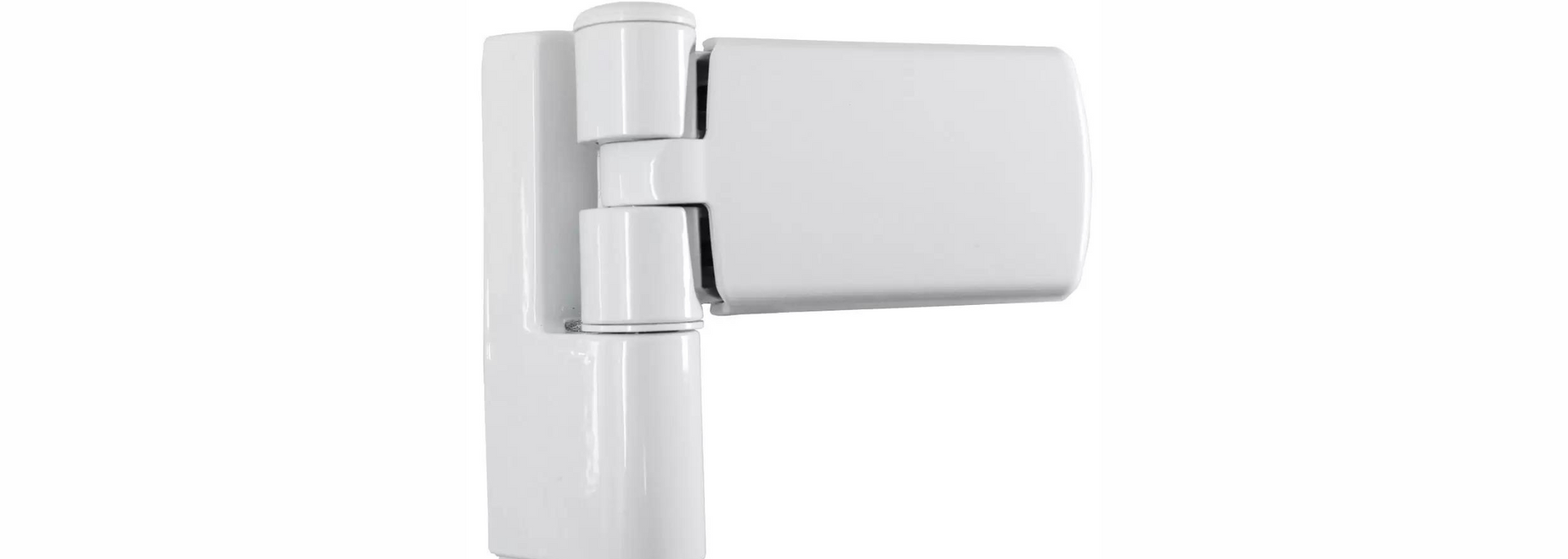
These hinges look a bit like – you guessed it – flags.
Modern uPVC doors usually have flag hinges. Luckily for you, if you have one, these hinges give you the most control over door adjustments. You should have no trouble whether you need to move the door closer or further away from the frame.
T hinges
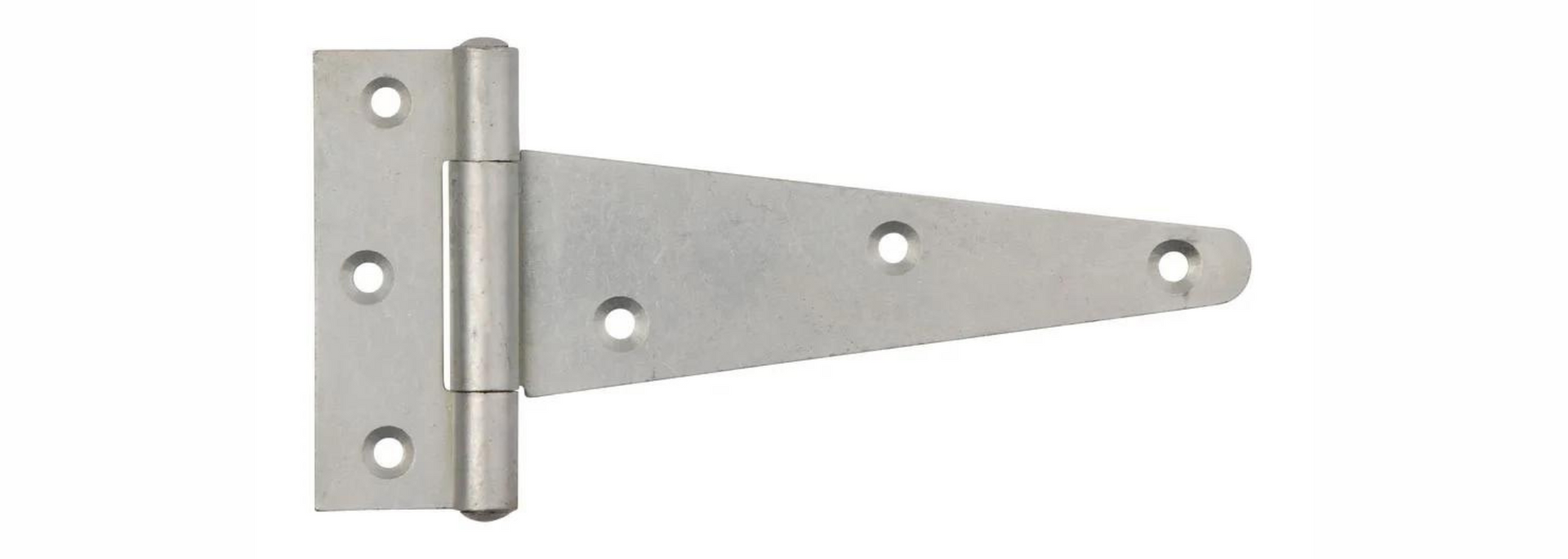
These hinges look very similar to a flag hinge, but the "flag" part is in the middle rather than on top. It can be adjusted in the same directions – vertically and laterally.
How can I adjust uPVC doors?
Here's how to adjust each type of hinge listed above and the tools you'll need to do so.
Essential tools
Get yourself the following tools in your kit:
- Allen keys (also known as hex keys)
- Phillips head screwdriver
- Flathead screwdriver
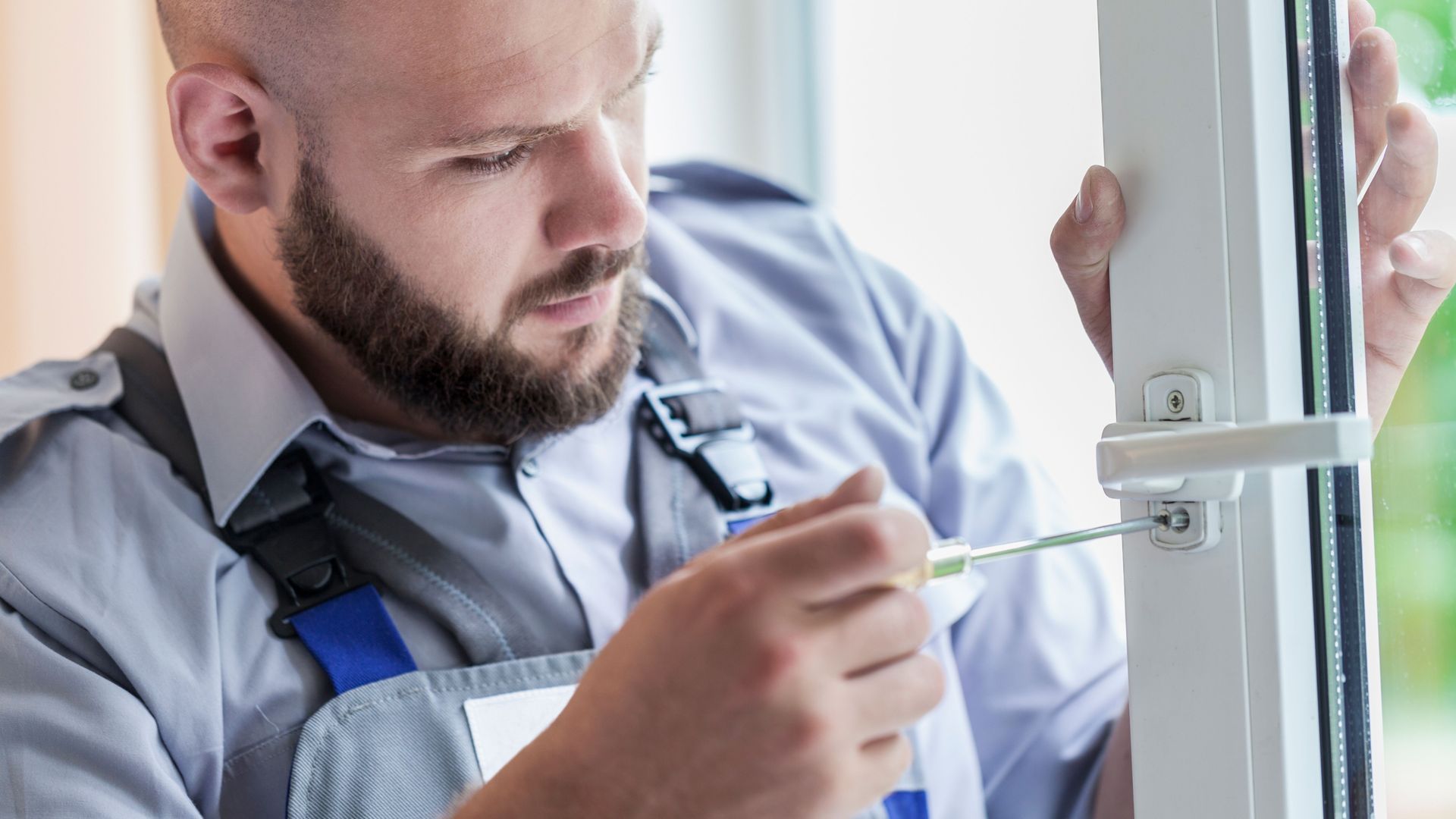
How to adjust flag hinges on uPVC doors
First, you need to get to the adjustment screws.
Look for a lateral adjustment screw behind a plastic cap over the hinge mechanism. Loosen the two Phillips screws inside the hinge to remove this.
Use a flathead screwdriver to pop the caps. These caps may be at the top and bottom of the hinge.
Now for the adjusting…
- Use an Allen key to rotate each screw once or twice right the way around to test the adjustment. Turn them slowly until you get your desired position.
The top screw on the hinge can usually help you adjust the height of the door up to 4.5 millimetres. - The side screw on the hinge can normally help you adjust the door from side to side up to five millimetres.
- The bottom screw on the hinge can usually help you adjust the compression up to two millimetres.
How to adjust T hinges on uPVC doors
Follow the steps above for a flag hinge. The only difference is that a T hinge may not have an adjustment for compression.
How to adjust butt hinges on uPVC doors
- If there are two Phillips screws on the side of the butt hinge, you can usually adjust the door laterally by around two millimetres. Simply turn the top or bottom screw to loosen it so you can move it side to side.
- Take the cap from the top of the hinge and expose the screw, then use an Allen key to adjust the hinge up and down.
- If you can see a screw right in the middle of the hinge, this will also need to be loosened before you adjust the pin.
How to adjust uPVC doors to prevent draught
Screws, latches, and hinges can loosen and cause misalignment as time goes by. The solution? Adjust your door latch so the lock and latch fit together nicely. This helps keep the door primely positioned in its frame.
You'll also want to read the tips above on general misalignment and adjust the hinges to help prevent rattling.
How to adjust uPVC doors that drag on the floor
A uPVC door that has dropped on the side of the handle can usually be fixed like this:
- Keep the door closed.
- Use an Allen key to adjust the screw on the door side of the hinge.
- Turn it fully around once or twice before testing to see if it drags, tweaking until you can open and close the door in a smooth motion.
Tried adjusting your uPVC door to no avail? Or perhaps you want to upgrade to a more modern model? We've got lots of high-quality
uPVC replacement doors and skilled people to fit them here at Calder Windows.
As Yorkshire's door and window specialists, we supply only the best products from trusted retailers, as well as a professional fitting service and a 10-year warranty for all door, window and conservatory installations.
Get in touch today to speak to one of our friendly window experts and let's see what we can do to help.
Recent Posts